Aerators
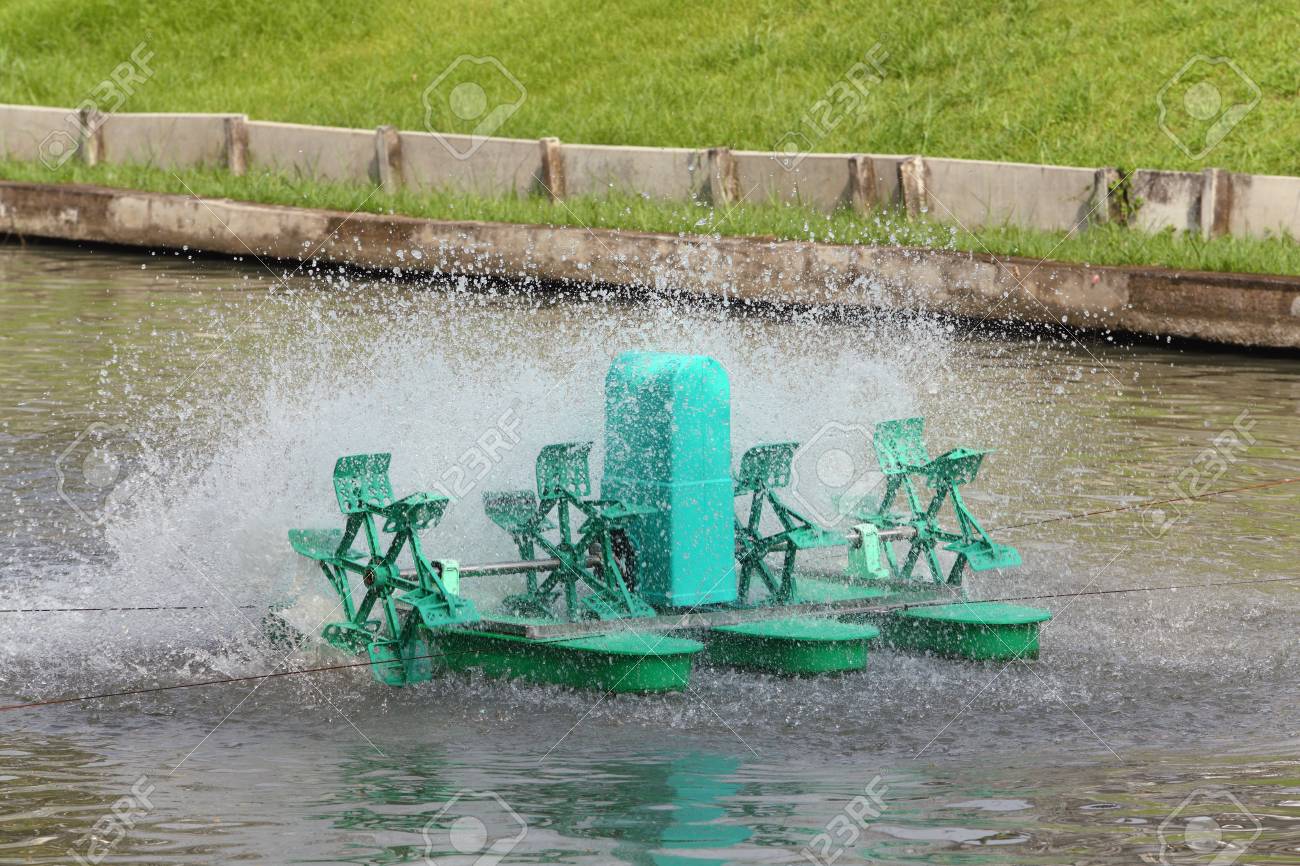
Aeration is the process of bringing water and air into close contact in order to remove dissolved gases, such as carbon dioxide, and to oxidize dissolved metals such as iron. It can also be used to remove volatile organic chemicals (VOC) in the water. Aeration is often the first major process at the treatment plant. During aeration, constituents are removed or modified before they can interfere with the treatment processes. Aeration is used to treat tastes and odors, to help remove minerals such as iron and manganese from water, and to remove carbon dioxide from the water. Aeration removes or modifies the constituents of water using two methods - scrubbing action and oxidation. Scrubbing action is caused by turbulence which results when the water and air mix together. The scrubbing action physically removes gases from solution in the water, allowing them to escape into the surrounding air. In the picture above, carbon dioxide and hydrogen sulfide are shown being removed by scrubbing action. Scrubbing action will remove tastes and odors from water if the problem is caused by relatively volatile gases and organic compounds. Oxidation is the other process through which aeration purifies water. Oxidation is the addition of oxygen, the removal of hydrogen, or the removal of electrons from an element or compound. When air is mixed with water, some impurities in the water, such as iron and manganese, become oxidized. Once oxidized, these chemicals fall out of solution and become suspended in the water. The suspended material can then be removed later in the treatment process through filtration.
ADVANTAGES
-Exhibit high OTEs.
Exhibit high aeration efficiencies (mass oxygen transferred per unit power per unit time).
Can satisfy high oxygen demands.
Are easily adaptable to existing basins for plant upgrades.
Result in lower volatile organic compound emissions than nonporous diffusers or mechanical
aeration devices.
THUMB RULE
There are a number of approaches that can be taken in calculating oxygen demand. What is provided here are some empirical or rule-of-thumb guides to estimate the oxygen requirement for activated sludge.
They are :
-3 3 1,500 ft to 2,000 ft air/lb of 5 day biochemical oxygen demand (BOD)
1.1 lb of oxygen transferred per lb of BOD applied to a conventional activated sludge system.
0.5 to 2.0 ft /air/gal of wastewater treated.
500 to 900 ft air/lb of BOD removed with at least 33 ft air/min/ft of tank for mixing.
Copyright © 2020, Water 2 People Teknologies Pvt. Ltd. All Rights Reserved.